Criminal appeals
Appeals of right and discretionary review from criminal judgments in three states, briefed on the record rather than on the story.
Lead Counsel
Licensed in three states. Accountable in all three.
Founder and lead counsel of Libre Litigation Inc. His practice is criminal appeals, post-conviction litigation, and federal habeas corpus in Michigan, Arizona, and North Carolina.
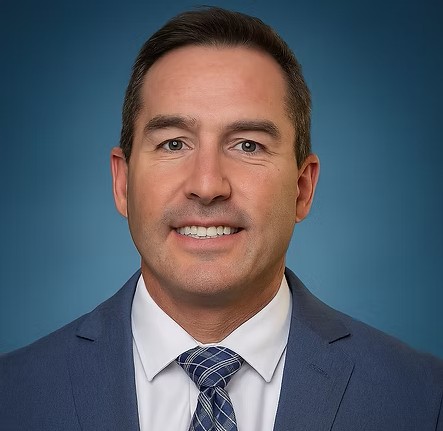
J.D., Cum Laude
WMU Thomas M. Cooley Law School
What He Handles
Appeals of right and discretionary review from criminal judgments in three states, briefed on the record rather than on the story.
Motions for relief from judgment, Rule 32 proceedings, and motions for appropriate relief, including claims that need an evidentiary hearing.
Section 2254 petitions after state remedies are exhausted, with the AEDPA clock, exhaustion, and procedural default treated as the first questions.
Scoring and guidelines challenges, consecutive-term disputes, and post-judgment requests to correct an illegal sentence.
Cases that are still in the trial court, handled with the appellate record in mind so the issues are preserved while they can still be preserved.
A read of the judgment, docket, and transcript to tell you which remedy is actually available before any fee is quoted.
The Record
Allan John Sharp, Jr. is a licensed attorney in Michigan, Arizona, and North Carolina and serves as Lead Counsel at Libre Litigation Services Inc., where he focuses on criminal defense, appellate advocacy, and post-conviction litigation. His practice is grounded in constitutional law, procedural precision, and a steadfast commitment to justice.
He earned his Juris Doctor, Cum Laude, from WMU Thomas M. Cooley Law School, where he developed a deep respect for the rule of law and a principled approach to legal advocacy. His academic achievement reflects both discipline and intellectual rigor, qualities that continue to define his practice.
Throughout his career he has handled cases at every stage of litigation, from trial-level proceedings through appeals and post-conviction review. He is known for navigating complex procedural issues, identifying constitutional violations, and crafting legal strategies designed to reach a meaningful result for the person the case belongs to.
“Every client deserves respect, clarity, and unwavering advocacy. I advocate with integrity, precision, and purpose, because that is what justice demands.”
Allan John Sharp, Jr., J.D. Cum Laude
Where He Appears
A case can move through three levels of state review and then into federal court. Handling all of it in one office keeps the record and the arguments consistent from the first filing to the last.
Circuit courts in Michigan, superior courts in Arizona, and superior and district courts in North Carolina, where post-conviction motions are filed.
Michigan Court of Appeals, Arizona Court of Appeals Divisions One and Two, and the North Carolina Court of Appeals.
Applications and petitions for discretionary review after the intermediate court decides.
Habeas petitions in the Eastern and Western Districts of Michigan, the District of Arizona, and the Eastern and Western Districts of North Carolina.
How The Work Is Done
01
Arguments are built from the transcript, the rulings, and the docket. If the record does not support a claim, saying so is part of the job.
02
The first question is always which window is open. A strong issue filed late is still a dismissed case.
03
You get a written quote and a defined scope before the engagement begins, so the cost of the work is known while you are still deciding.
04
Clients should understand what is being filed, why it matters, and what happens next, without needing a law degree to follow it.
Before You Call
Michigan (#P87887), Arizona (#040989), and North Carolina (#64961), each in active and good standing. Federal habeas work follows from those state admissions and is filed in the district where the conviction occurred.
The firm focuses on Michigan, Arizona, and North Carolina. If a case sits elsewhere, the honest answer may be a referral to counsel admitted in that jurisdiction rather than an engagement the firm cannot properly handle.
The judgment, docket, and any appellate decision are reviewed to confirm which remedy is still available and which deadline applies. The initial review is free, and a written flat-fee quote follows if the case moves forward.
No. Every case turns on its own facts, the record, and the court's judgment. The firm can promise a careful reading of the record and a clear explanation of the options, not a result.
Talk To Counsel
The initial review is free. Bring the judgment, the docket number, and the sentencing date if you have them.